

035. Jeremy Novy
Pride on the Pavement: The Life and Work of Jeremy Novy
Introduction
Jeremy Novy is a California-based stencil and street artist whose work occupies a rare and defiant space: the intersection of queer identity, public activism, and the inherently subversive world of street art. Born in Reedsburg, Wisconsin, and shaped by a turbulent childhood, Novy has spent more than two decades using spray cans, stencils, and wheatpaste to make visible what mainstream culture, and even the street art world itself, has tried to ignore or erase.
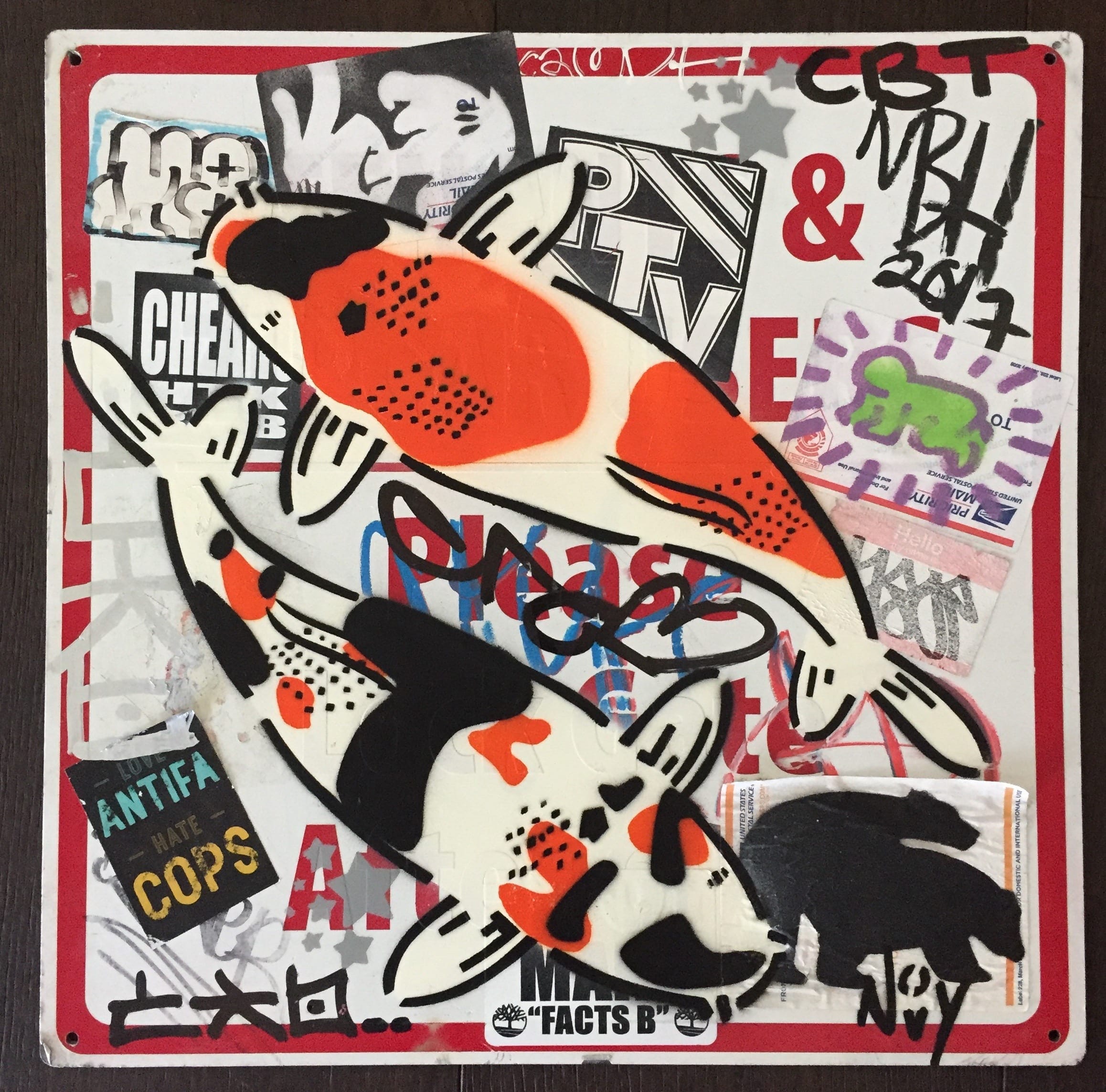
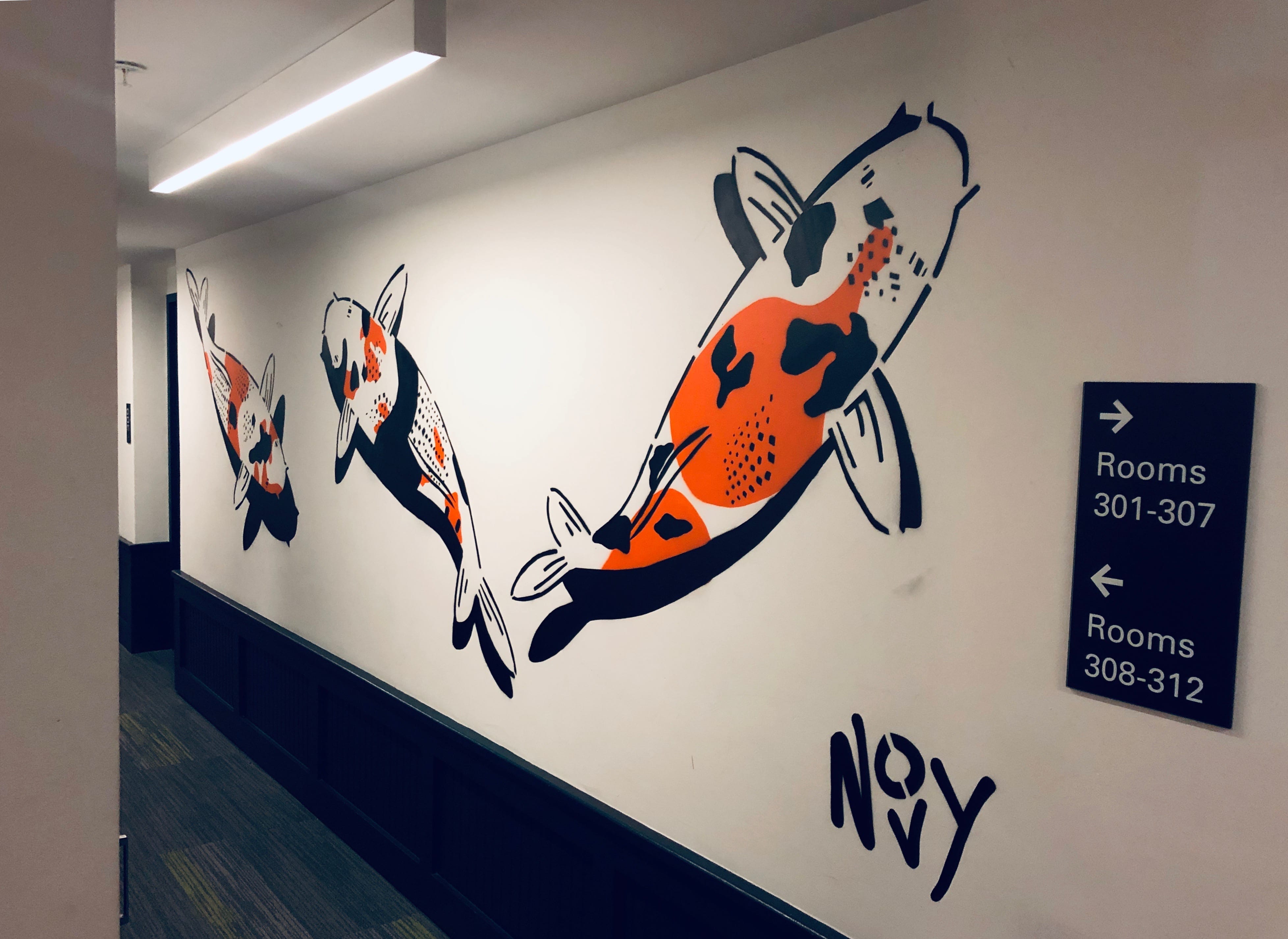
Street art has long been dominated by heterosexual men, a subculture where homophobia has flourished openly: queer graffiti artists have had their work defaced with slurs, their supplies stolen, and they have been targeted with violence. Into this landscape, Jeremy Novy arrived not as a reluctant outsider but as a deliberate disruptor. His iconic sidewalk koi fish, rendered in meticulous stencil work in cities across North America and beyond, offered an entry point of beauty and shared humanity. Beneath that accessible surface lay something more radical: a commitment to making queer people visible, celebrated, and historically documented in the one place where everyone could see them regardless of income, education, or museum access.
“I was introduced to the homophobia that exists in graffiti culture at a very young age. Being a queer graffiti artist meant “FAG TAGGER” would be sprawled across your art. Mix that with the extremely heterosexual-dominated world of lowbrow art and you find queer street art doesn’t fit in. In 2008 when I moved to San Francisco, a city known for queer street art and knowing that a large demographic of the city was queer, I wanted to start placing queer images on the streets and start talking about the homophobia that exists in the art form’s subculture.”
— Jeremy Novy in an interview with Sunni Johnson of Wussy Mag
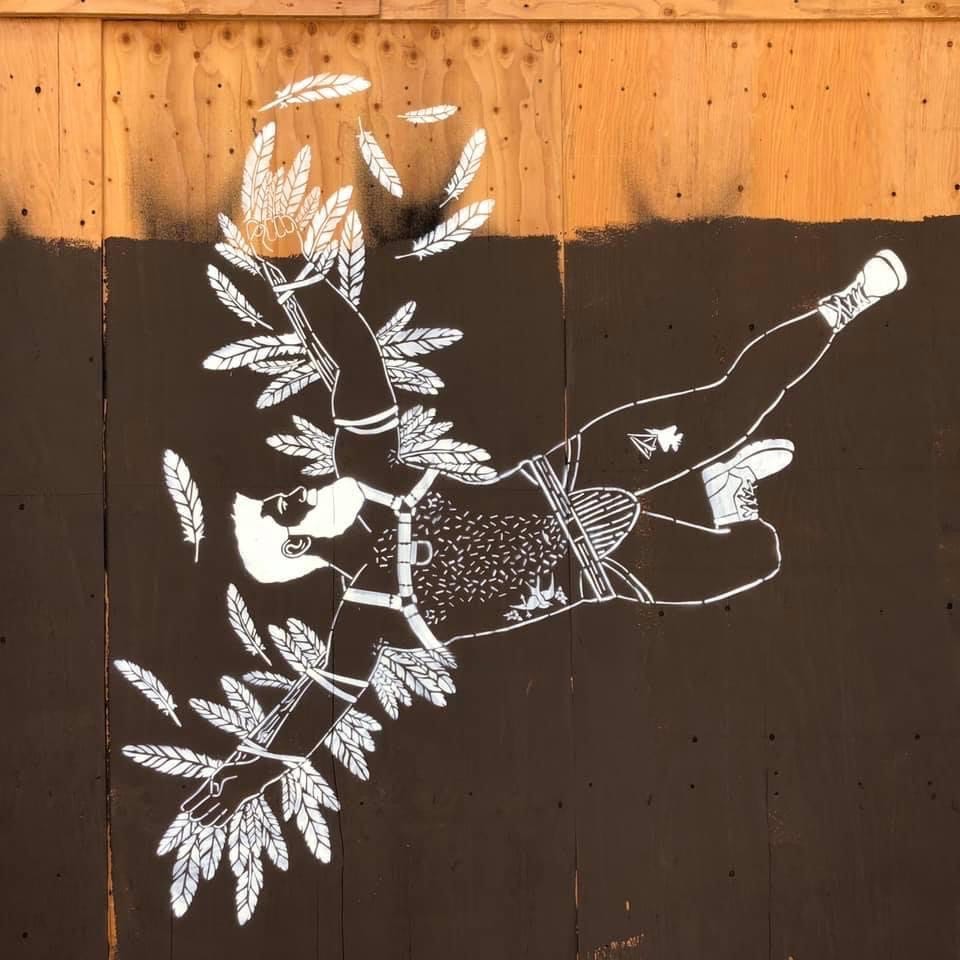
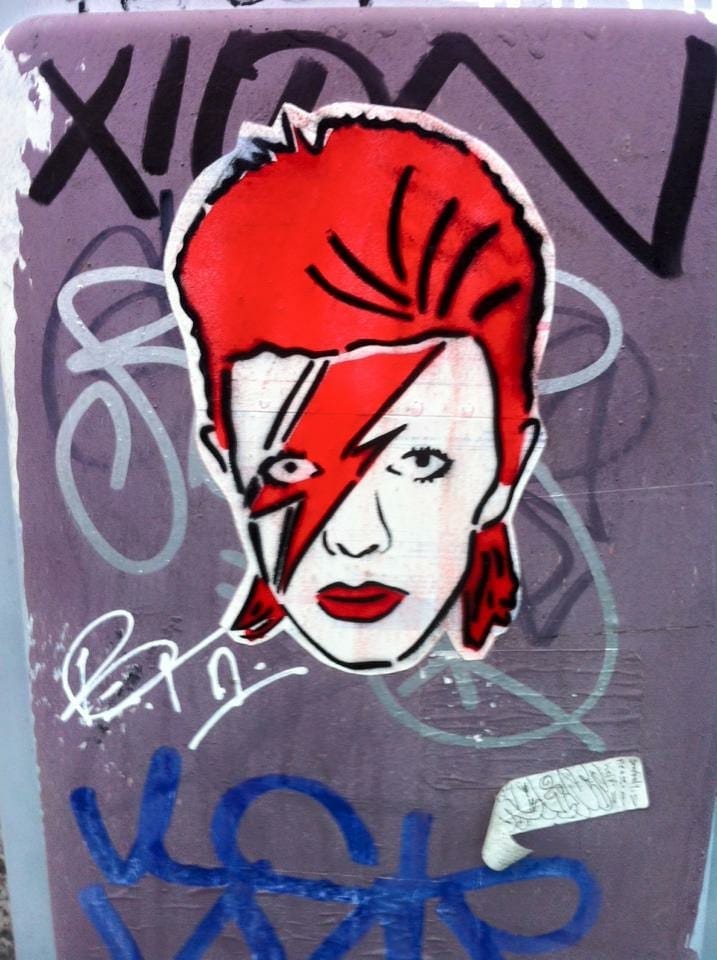
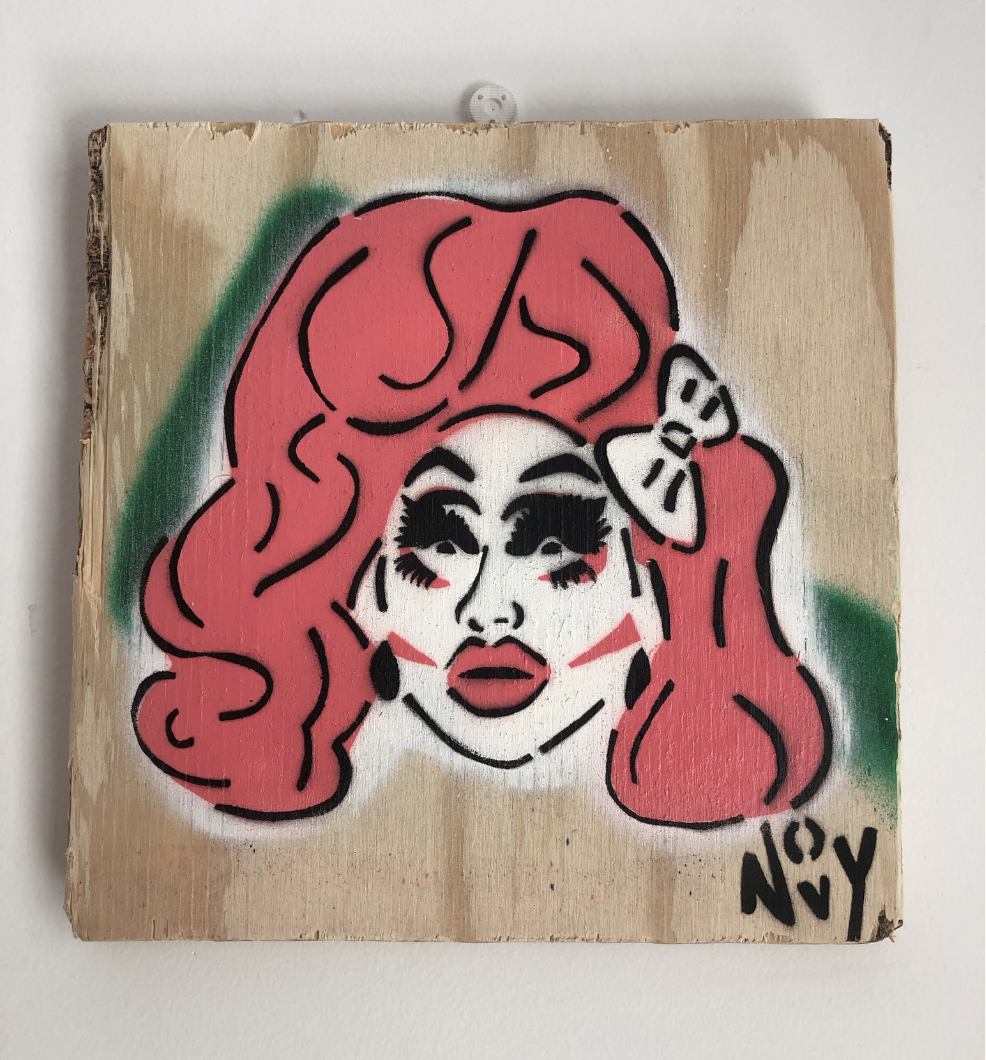
Novy’s practice is inseparable from his identity. His stencils of drag queens, leather men, queer care bears, and LGBTQIA2S+ historical figures are not decorations; they are declarations. Each image placed on a public wall, sidewalk, or alley is a claim on space, an assertion that queer people belong in the landscape of the city, not just in the private spaces of bars and clubs. His work has been celebrated with a National Endowment for the Arts grant, exhibited at Yale University, and featured in international media, yet he has also been arrested, vilified, and had his art destroyed. That contradiction, beloved and criminalized, is itself a reflection of the broader queer experience in America.


This profile traces the arc of Jeremy Novy’s life and career: from a troubled small-town childhood to the rave scenes of Chicago, from Milwaukee’s queer bar culture to the streets of San Francisco, Los Angeles, and cities worldwide. It examines the influences that shaped him, the artworks that defined him, and the communities that found themselves unexpectedly reflected back in his stencils on the street.

Early Life and Background
Cultural and Personal Influences
Jeremy Novy was born in Reedsburg, Wisconsin, a small town about 45 minutes northwest of Madison in Sauk County. From the very beginning, his life was shaped by instability. His parents were only 17 years old when he was born, and his biological father was imprisoned shortly after his birth, convicted for a series of robberies in Wisconsin Dells. The father Jeremy grew up with was a stepfather with a history of violent relationships who, by Novy’s own account, never treated him with the respect owed to a child. His mother worked constantly to keep food on the table, leaving Jeremy to navigate a home environment he describes as deeply dysfunctional.
“When I was born, my parents were only 17, and my biological father went to prison a few days after I was born. He was always in trouble as a teenager, but they finally convicted him for a series of robberies in Wisconsin Dells, and he spent most of my childhood in prison.
So, I never really got to know him, and I was told that this other person – my stepfather – was my father. I am not sure how he got involved with my mother, but he had a history of violent relationships, and he never treated me with any respect as his child. My mother worked a lot to put food on the table, and I had to deal with this stepfather.
This was not a situation that was going to end well.”
— Jeremy Novy in an interview with Michail Takach of Wisconsin LGBTQ History Project
The psychological impact of that home would shape everything that came after. Jeremy was a loner in high school, a gay kid in a town full of jocks, trying to survive by being invisible and managing violence both at home and in the hallways. When he put a bully, who turned out to be the head of the basketball team, in a headlock, the school expelled him rather than the star athlete. He was placed in an alternative school, and became the only student ever to exit the program adjusted enough to return to a mainstream environment. He credits not his circumstances but himself for that outcome.
“My stepfather would fight me because I fought kids at school. It is crazy to think this adult wanted to fight me. I learned that I could not fight the other students. So, I put one of them in a headlock, and he turned out to be the head of the basketball team. Since they could not expel him, they expelled me.
I never thought, and I still do not think, that there was ever anything wrong with me. There was a lot wrong with my home environment. It was very, very dysfunctional.”
— Jeremy Novy in an interview with Michail Takach of Wisconsin LGBTQ History Project
After running away from home and from shelter care, living independently by convincing Wisconsin Dells employers he was a college student, and eventually being legally emancipated at sixteen, Jeremy was driven by a singular determination to prove something. He describes getting his high school diploma, despite everything, despite neither parent having graduated, as one of the most profound achievements of his life. It was proof to himself and to the world that he could matter. That conviction, that he was worth something, that his experiences and identity deserved to take up space, would become the beating heart of all the art that followed.
“I wanted to achieve something, and I wanted to prove to my stepfather that I was important. I got to walk down that aisle and get my diploma in the end. That was a huge, huge achievement for me. I proved to myself and everyone around me that I could and would do important things in the world.”
— Jeremy Novy in an interview with Michail Takach of Wisconsin LGBTQ History Project

The Chicago rave scene was perhaps the first cultural environment where Novy found genuine belonging. Before he could legally enter bars, raves offered a space to meet queer people his own age, to exist openly in a world that embraced difference, and to begin understanding what it meant to be gay not as a secret but as a community. He came out at eighteen and moved first to Minneapolis, then to Milwaukee, carrying with him an understanding of queerness forged not in safety but in survival, an understanding that would infuse every stencil he ever made.
Early Exposure to Art and Education
Jeremy Novy’s earliest exposure to art-making was, like much of his early life, born of necessity and discovered in unexpected corners. He began using spray paint in high school, not as a sanctioned artistic pursuit but as a covert, thrilling act of creation. He painted freight trains that rolled past the canning factory behind his house, watching his images travel away from a town that had given him little reason to stay. The act of putting something out into the world and watching it move, watching it reach places he hadn’t been and people who didn’t know him, planted a seed that would define his entire career.
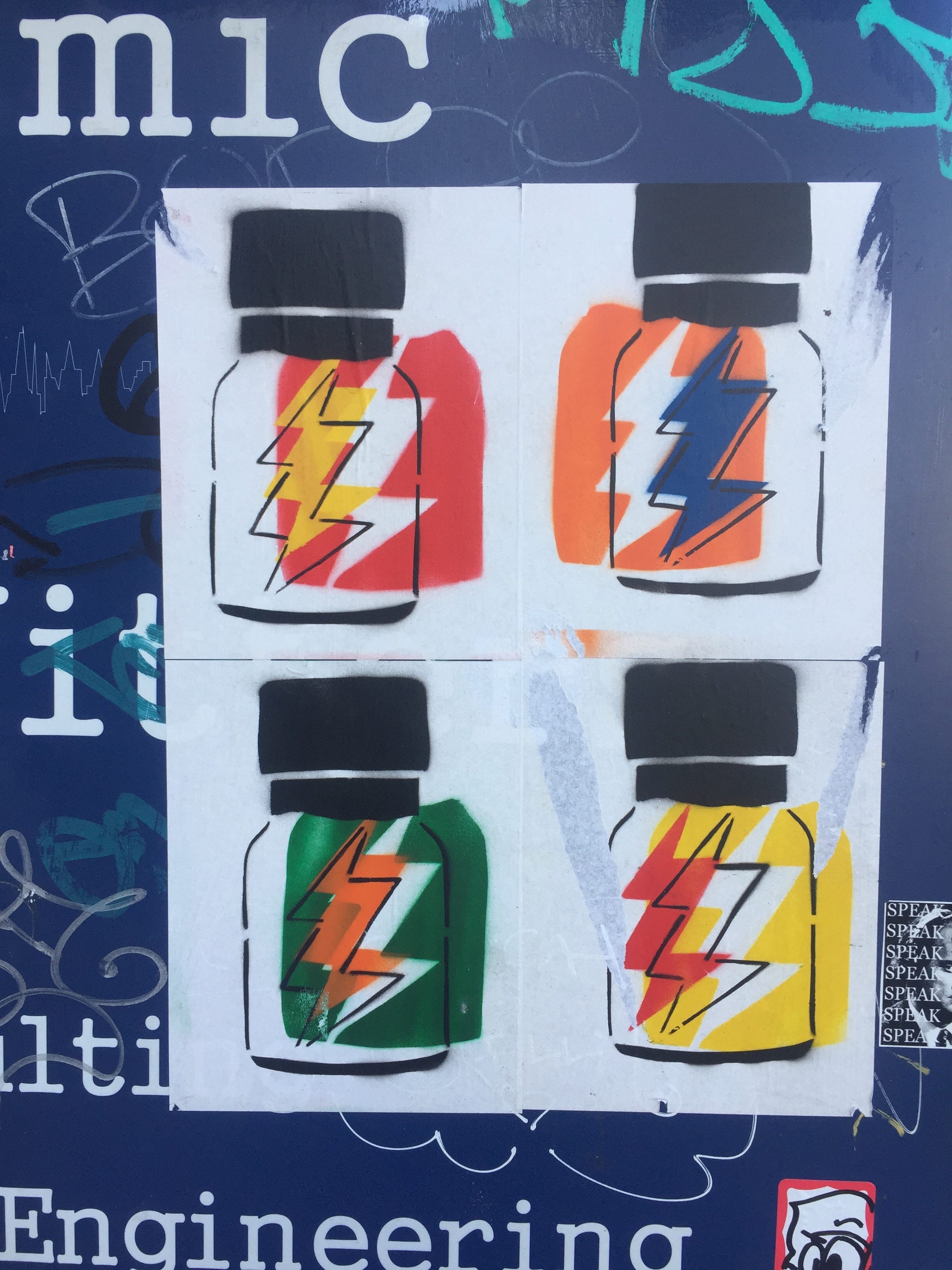
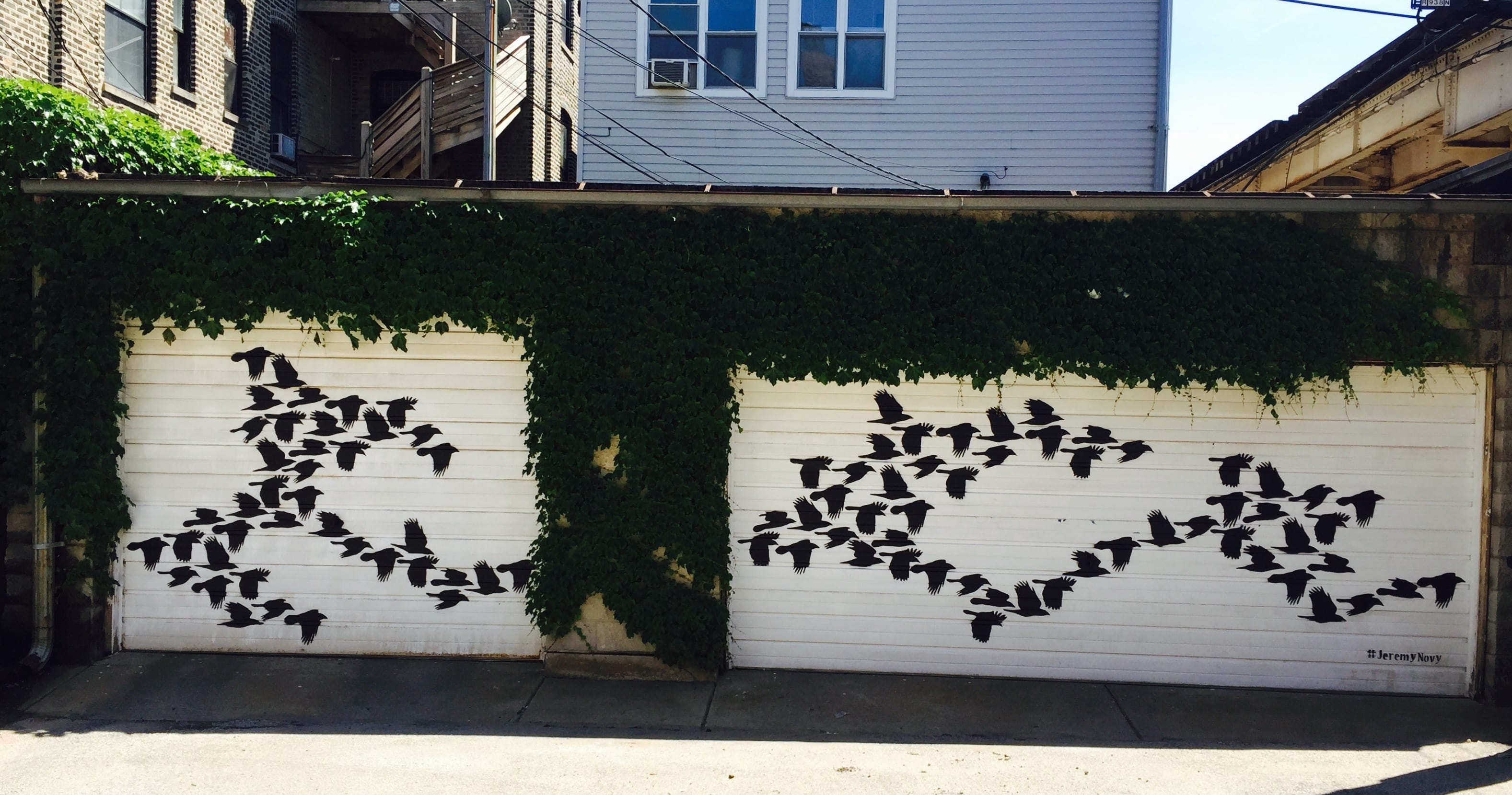
“I started using spray paint in high school as a means to give this weird gay artist something to secretly do! I painted freight trains that would come and go from the canning factory in my backyard. After moving to NYC in 1999 for a year, I quickly began to see street art as something more than letters and names tagged on walls. My first art degree in graphic design lead me to create stencils just as if I was vectoring an image or making a logo. By my second art degree in photography, I was using stenciled posters wheat pasted on the streets as a still life meant to be seen as a photograph.”
— Jeremy Novy in an interview with Sunni Johnson of Wussy Mag
His formal education followed a non-linear path shaped by economic reality and intellectual curiosity. He earned an associate degree in graphic design from Gateway Technical College in Elkhorn, Wisconsin in 2004, an education that gave him a structural understanding of visual communication, stenciling, and the logic of images as tools of persuasion. He later transferred to the University of Wisconsin-Milwaukee’s Peck School of the Arts, where he earned a Bachelor of Fine Arts in photography in 2008. The combination of graphic design thinking and photographic seeing would prove formative: he began to understand stenciled street art not just as graffiti but as a kind of outdoor still life photography, a way of placing an image in a specific environment and watching the environment respond.


During his time at UWM, Novy had the opportunity to travel to China, twice in two summers, to study ancient and contemporary art, with his bartending job at Boot Camp held for him upon return. What he found in China changed the direction of his work fundamentally. He encountered political propaganda posters that used the logic of subliminal branding to tell citizens how to think, and was struck by how effective that visual language could be. If that same power could be redirected, not toward conformity but toward liberation, not to erase identity but to celebrate it, then street art could be a genuine force for social change. He also encountered the rich symbolism of koi in Chinese scroll art, and the seeds of his most iconic image were planted.
Novy’s first real encounter with street art as a recognized creative practice came around 1998, when he encountered the Beautiful Losers exhibition in Brooklyn, what he describes as the world’s first exhibit of street art. The show demonstrated something radical: that work made outside the rules of fine art, on the streets rather than in studios, could be received as serious and worthy. There were no rules about how stencils had to look, no gatekeepers deciding whether your style was legitimate. That freedom, combined with his formal design and photography training, gave Jeremy a unique synthesis, the rigor of a trained artist with the urgency of someone who had something essential to say.
“In Brooklyn around 1998, there was the very first exhibit of street art in the world called “Beautiful Losers.” It didn’t have all these rules you find with other art forms. If you don’t paint, sculpt, or even photograph in a specific way, it’s not art. Street art had no rules! But there have since come some standards as to what is good or bad street art.”
— Jeremy Novy in an interview with Sunni Johnson of Wussy Mag

Artistic Influences and Style
Key Influences
Jeremy Novy’s artistic influences are as layered as his identity, drawn from the history of political art, the visual language of queer subculture, the formal disciplines of graphic design and photography, and the living tradition of street art. His time in China, studying both ancient scroll paintings and contemporary communist propaganda posters, gave him a framework for understanding how images function as ideology. The propaganda posters he encountered were masterclasses in subliminal branding: simple, reproducible images designed to shape how a population thinks about itself and its world. Novy took that mechanism and turned it against itself, using the same logic of mass visual communication to advocate for the people those systems had historically excluded.
The graffiti and street art world provided a more complicated set of influences. Jeremy describes his first encounter with the Beautiful Losers exhibition in Brooklyn around 1998 as a formative experience. It was the first time he understood that street art could be taken seriously as an artistic practice, that the lawlessness of the form was not a liability but a source of freedom. From street art, he inherited the ethics of accessibility: art should be free to everyone, not locked behind gallery admission fees and sold to wealthy collectors. He has often pointed out the economics of the form, with $30 worth of spray paint and vinyl, he can create thirty koi fish on a sidewalk that will outlast a framed gallery exhibition and reach every demographic of a city’s population.
“When I started, I wanted to make art that everyone can see, as well as maybe political art that would not be able to be shown in a gallery. There also was a time when no matter what you made or how well it was executed, it was still cool. Now it’s all dominated by murals and legal art that doesn’t have the same surprise aspect as street art. There is also the price of street art compared to an exhibit of large format printed photographs, mounted and framed with glass. You’re looking at $1000, most likely more. For $9, I can buy a can of spray paint. With three cans I can do roughly thirty koi fish on the street. The koi fish will last longer than the exhibit and it only cost me roughly $30 dollars, including vinyl for the stencil. It just all made more sense.”
— Jeremy Novy in an interview with Sunni Johnson of Wussy Mag
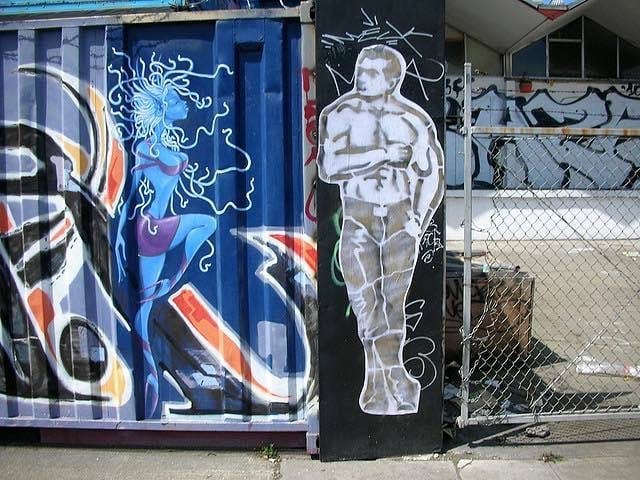
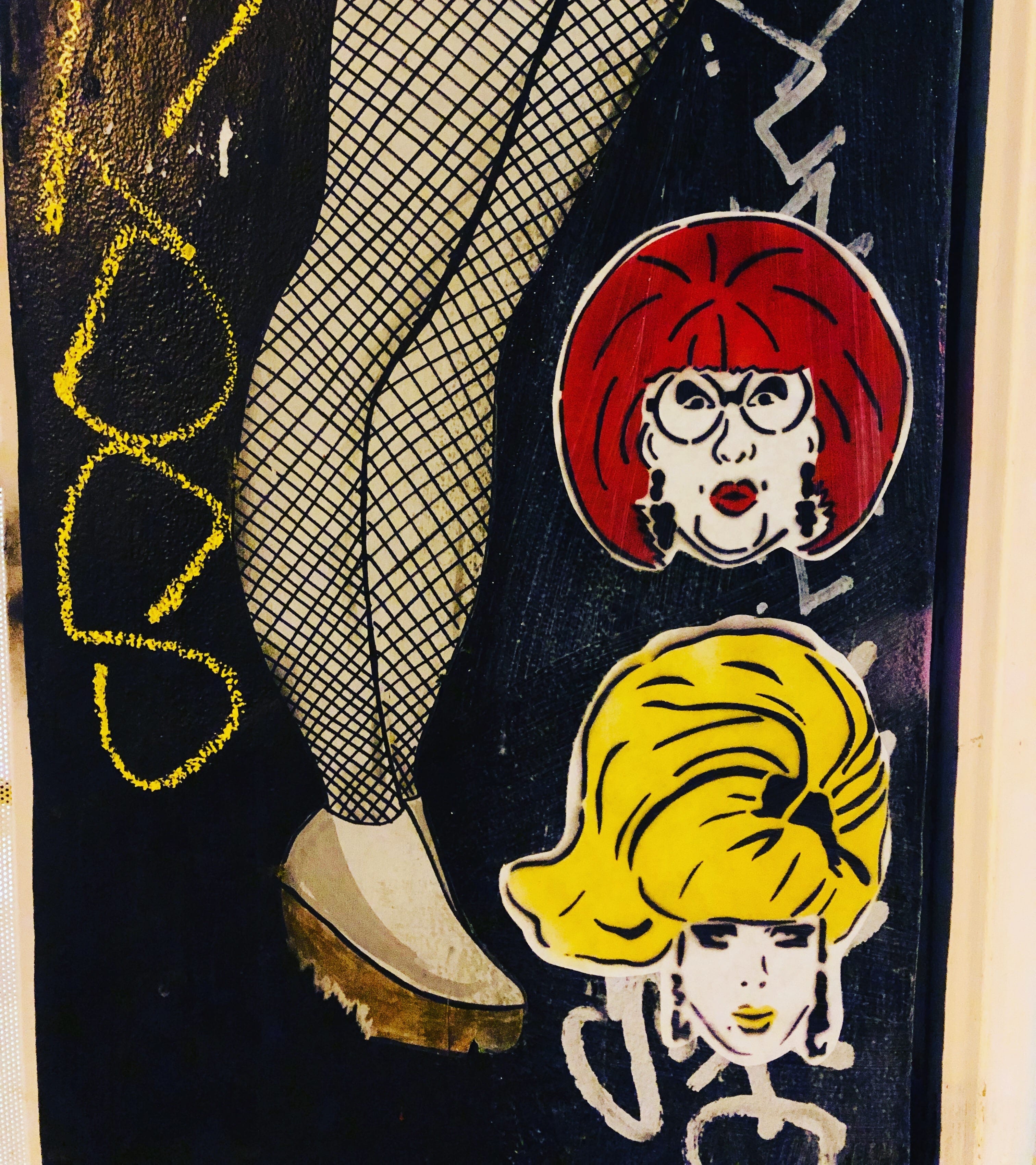
Tom of Finland and the tradition of homoerotic art provided another crucial layer of influence. Novy’s early stencils included Tom of Finland imagery, postal stickers placed on public surfaces, before evolving into the larger, more complex works that defined his career. These images represented a deliberate act of reclamation: taking imagery that had been confined to adult stores, gay bars, and underground magazines and placing it in the open light of the city street. Similarly, his encounter with the Wigstock documentary and figures like Lady Bunny introduced him to a tradition of drag performance as radical self-expression and community building, influencing his long series of drag queen stencils.
“While I was at Boot Camp, I created a few images that became my trademark. Tom of Finland images, which began as postal stickers. And then I saw the Wigstock documentary, and I thought, ‘this is my kind of happening, where people can be whoever they want to be.”
— Jeremy Novy in an interview with Michail Takach of Wisconsin LGBTQ History Project
The oral histories he absorbed while bartending at Milwaukee’s Boot Camp Saloon also shaped him in ways that defy easy categorization. The old-timers who shared stories of Juneau Park cruising, of the hidden geography of queer Milwaukee, of a life lived in the margins of a city that didn’t acknowledge their existence, these were his most important teachers. They gave him a sense of history, of the depth of queer experience before any of it was visible or protected. That education in oral queer history directly informed his later archival and commemorative work, his commitment to preserving in paint the moments that never made it into official histories.
Art + Identity
For Jeremy Novy, art and identity are not parallel tracks, they are the same road. To understand his art is to understand his queer identity; to understand his queer identity is to understand why his art takes the form it does, appearing not in galleries but on sidewalks and alley walls, not behind admission fees but in the full public view of anyone who walks by. He has described his queer street art as creating a sense of “queer visibility,” and that phrase captures something essential: visibility is not just representation but presence, the simple, powerful fact of being there.
“I need to keep putting out with queer images, to create queer visibility and safe space for the queer community. Just having images on the street is representation.
It is important for those images to be seen.”
— Jeremy Novy in an interview with Michail Takach of Wisconsin LGBTQ History Project
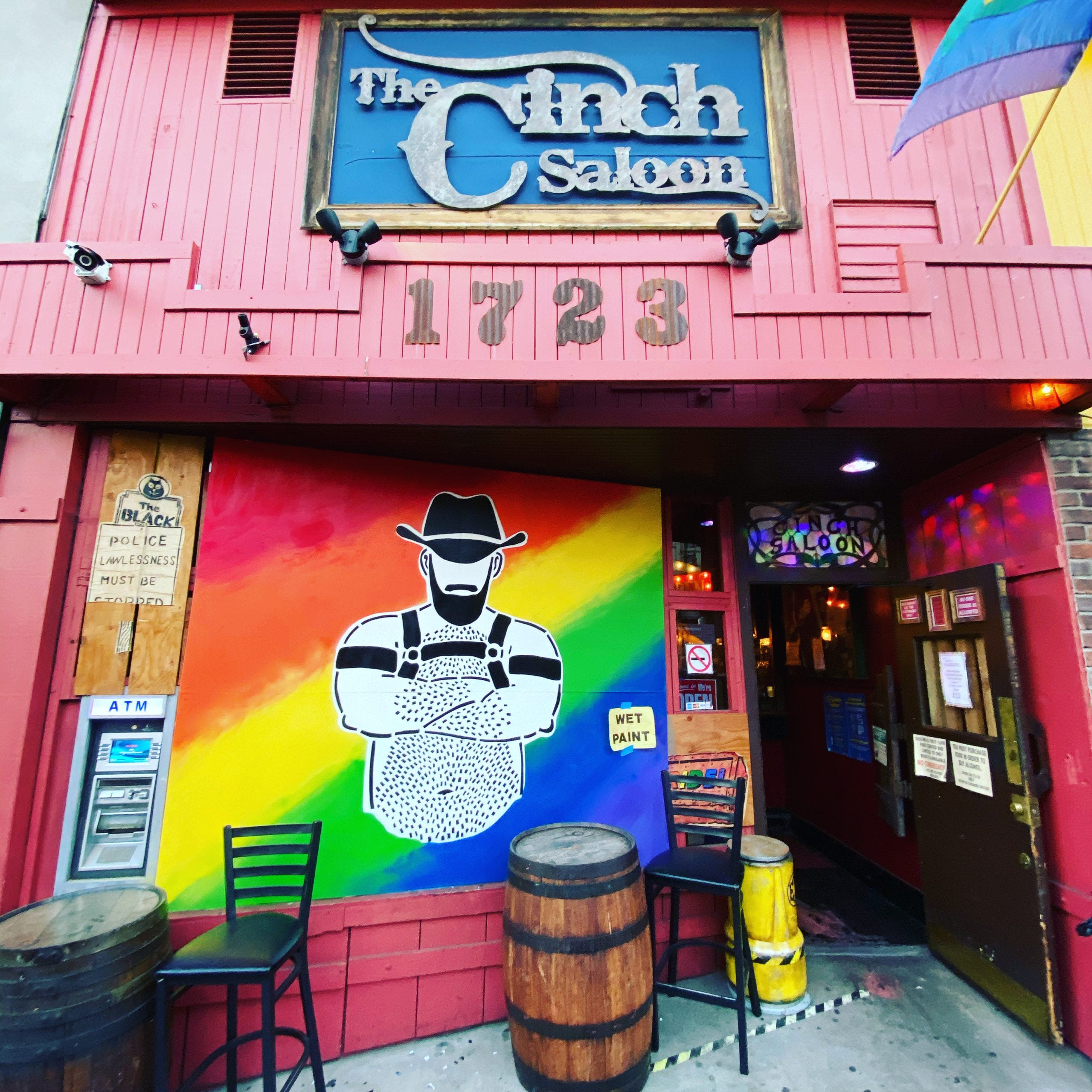
Jeremy is one of the very few street artists in the United States who is openly gay, a distinction that is more remarkable than it might seem given street art’s long history of aggressive heterosexual performance. In a subculture where gay graffiti artists had their work tagged with slurs, their supplies stolen or destroyed, and sometimes their persons attacked, being out was a political act as much as a personal one. Novy’s queer identity does not simply inform the subject matter of his work, it explains his decision to work in public space at all. The street is where the confrontation happens. That’s where the homophobia lives, in full view, and that’s where the response needs to live too.
His leather man series, figures with crossed arms in leather gear but without eyes, so that they could signify any race, any person, reflects a sophisticated understanding of identity’s multiplicity. By removing the markers that would assign a specific identity to the figure, Novy created an image that could be claimed by any queer person of any background. Queer images like these are images designed to be recognized by those who know and to pass unnoticed by those who don’t, a kind of visual code that has long been embedded in queer culture.
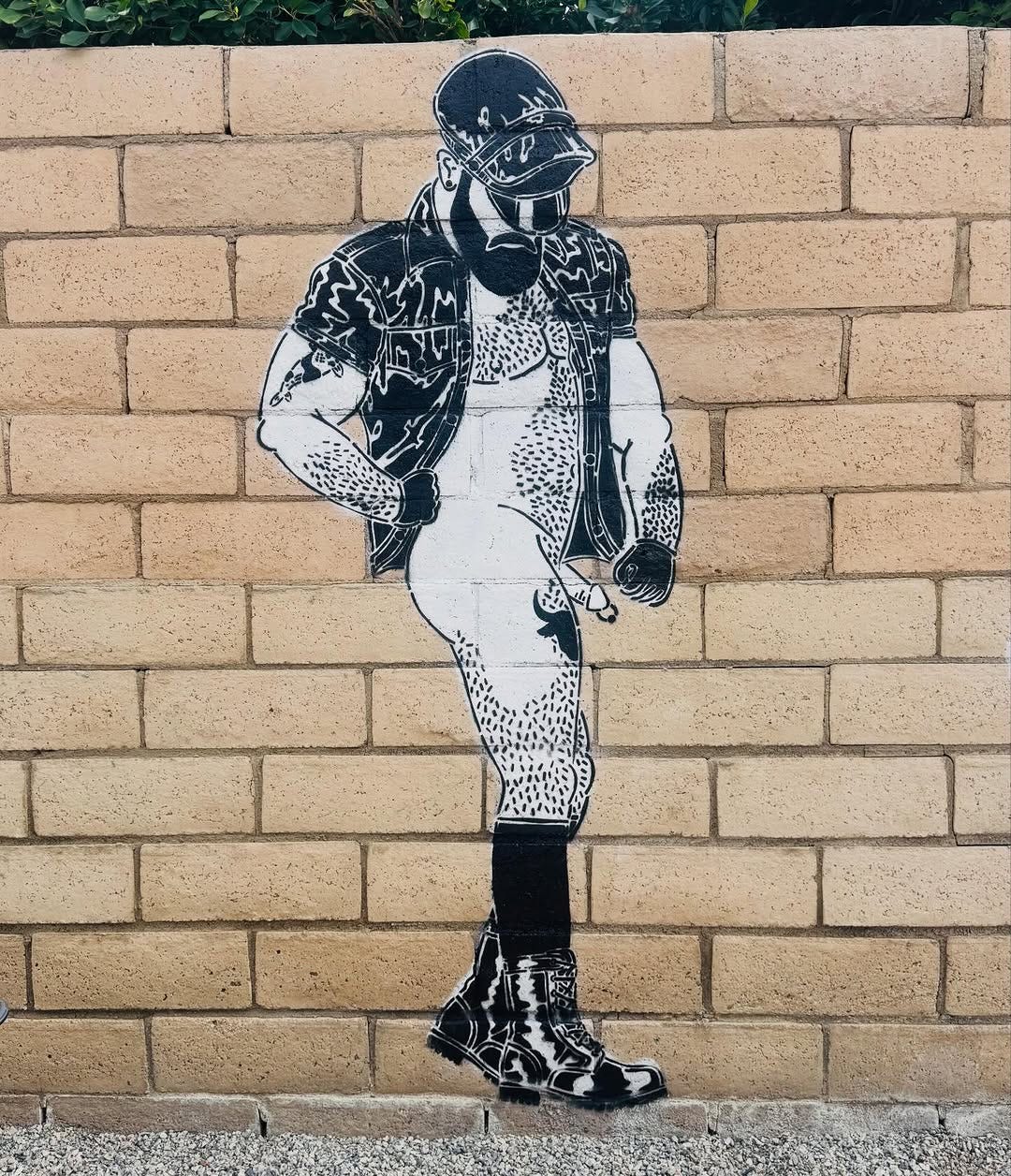
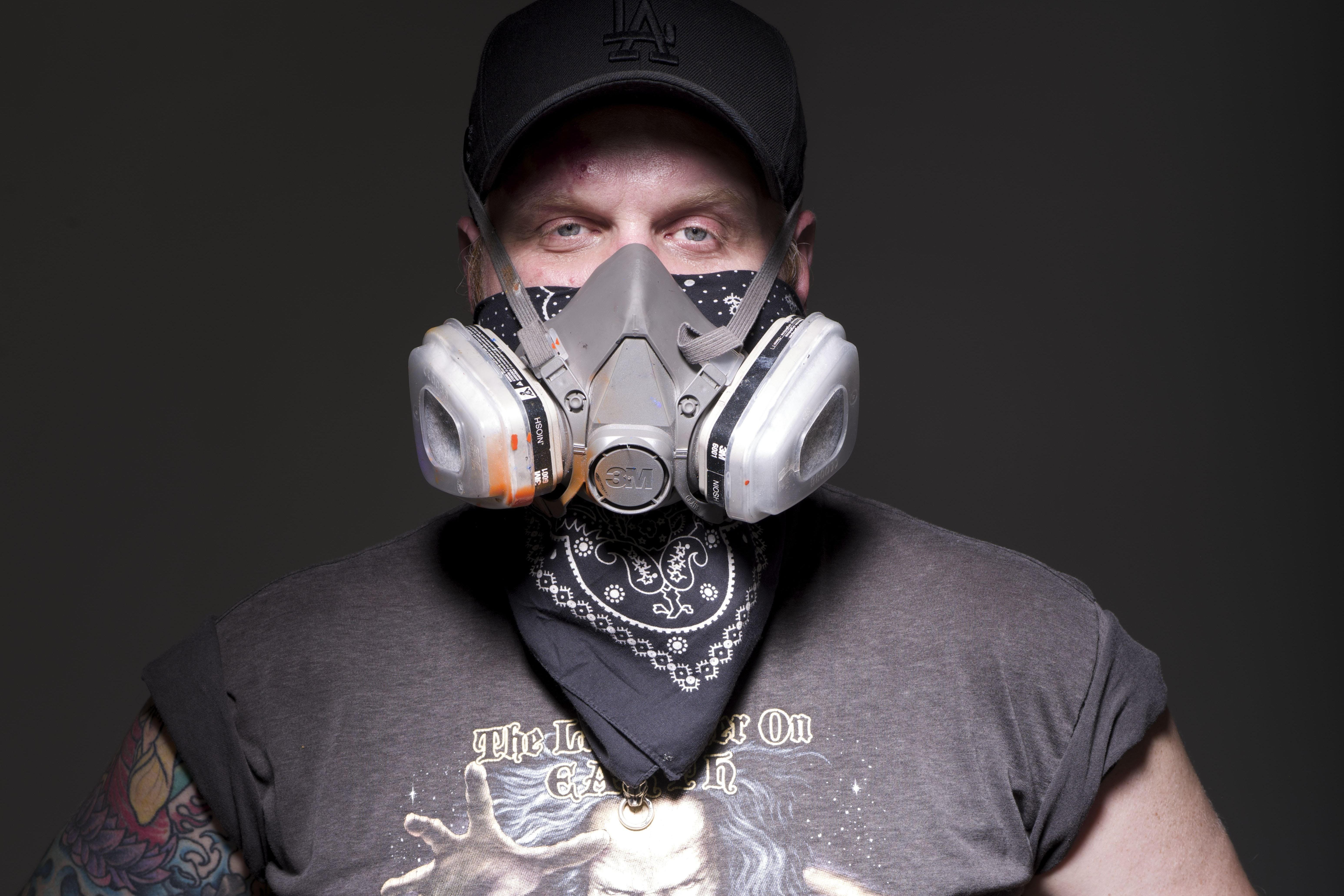
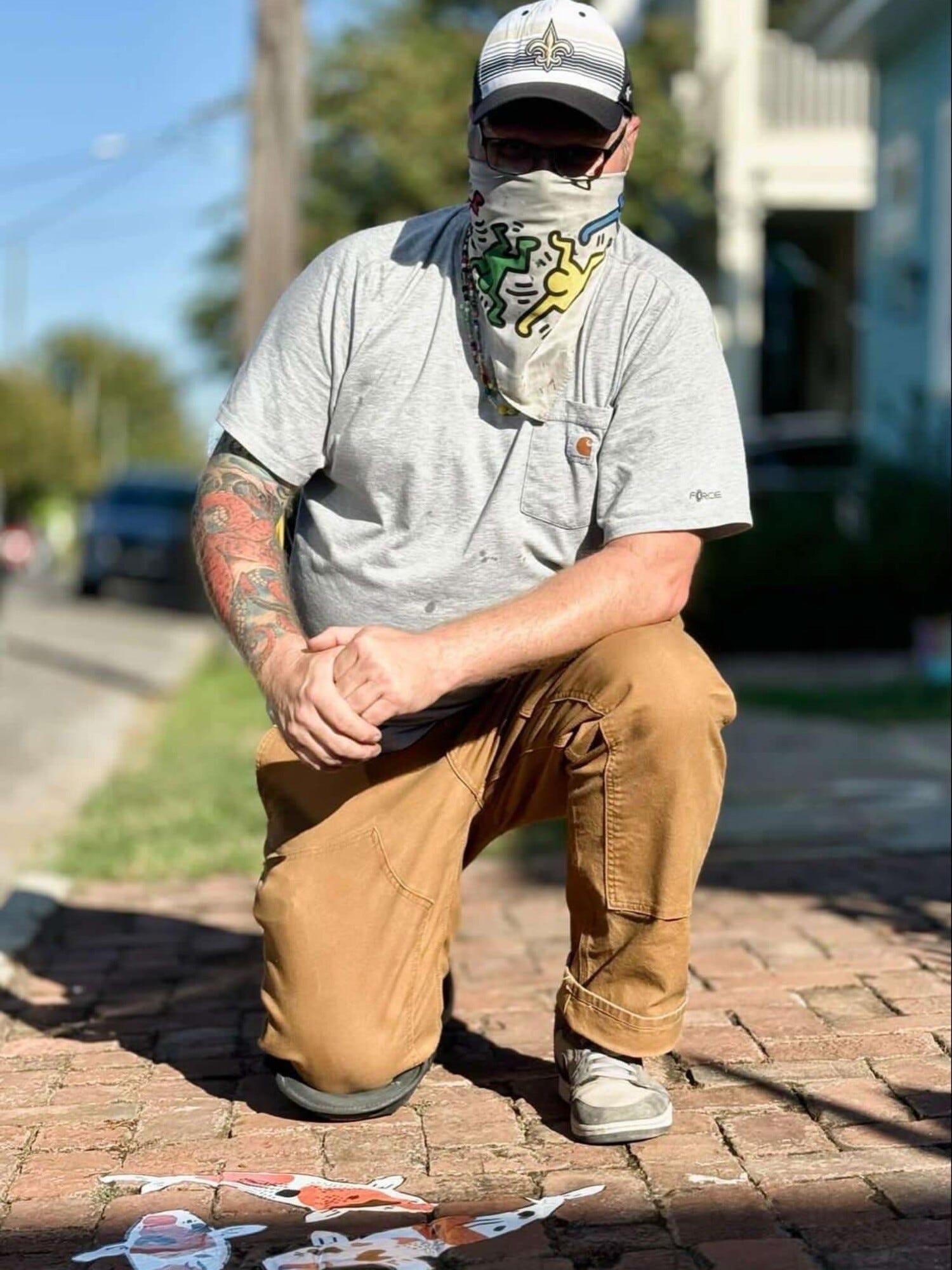
The decision to remove himself from his work, his face rarely appears in photos, his identity shielded partly for legal reasons and partly as a deliberate choice, is itself a statement about identity and art. He has said that he wants people to respond to the artwork, not to the artist, to find meaning in the image without the identity of the creator shaping that reception. There is something characteristically queer about this: the work carries the identity, the body disappears, and what remains is the image on the wall, making its claim on space long after the artist has moved on.
Art + Activism
Jeremy Novy has never been comfortable with a clean distinction between art and activism, because his practice refuses to allow one. From his earliest stencils of boarded-up buildings, attempting to highlight urban blight by overlaying beauty onto decay, to his most recent historical commemorations of queer resistance, every piece he has made is simultaneously an aesthetic object and a political argument. He discovered this early and accidentally when the Wisconsin State Journal ran an article about his urban still-life work and quoted the Department of Public Works responding with sympathy rather than condemnation, he realized that well-made public art could shift a conversation faster and more effectively than meetings, petitions, or formal advocacy processes. “I can cause social change by just doing art,” he has said. “That was fascinating to me.”
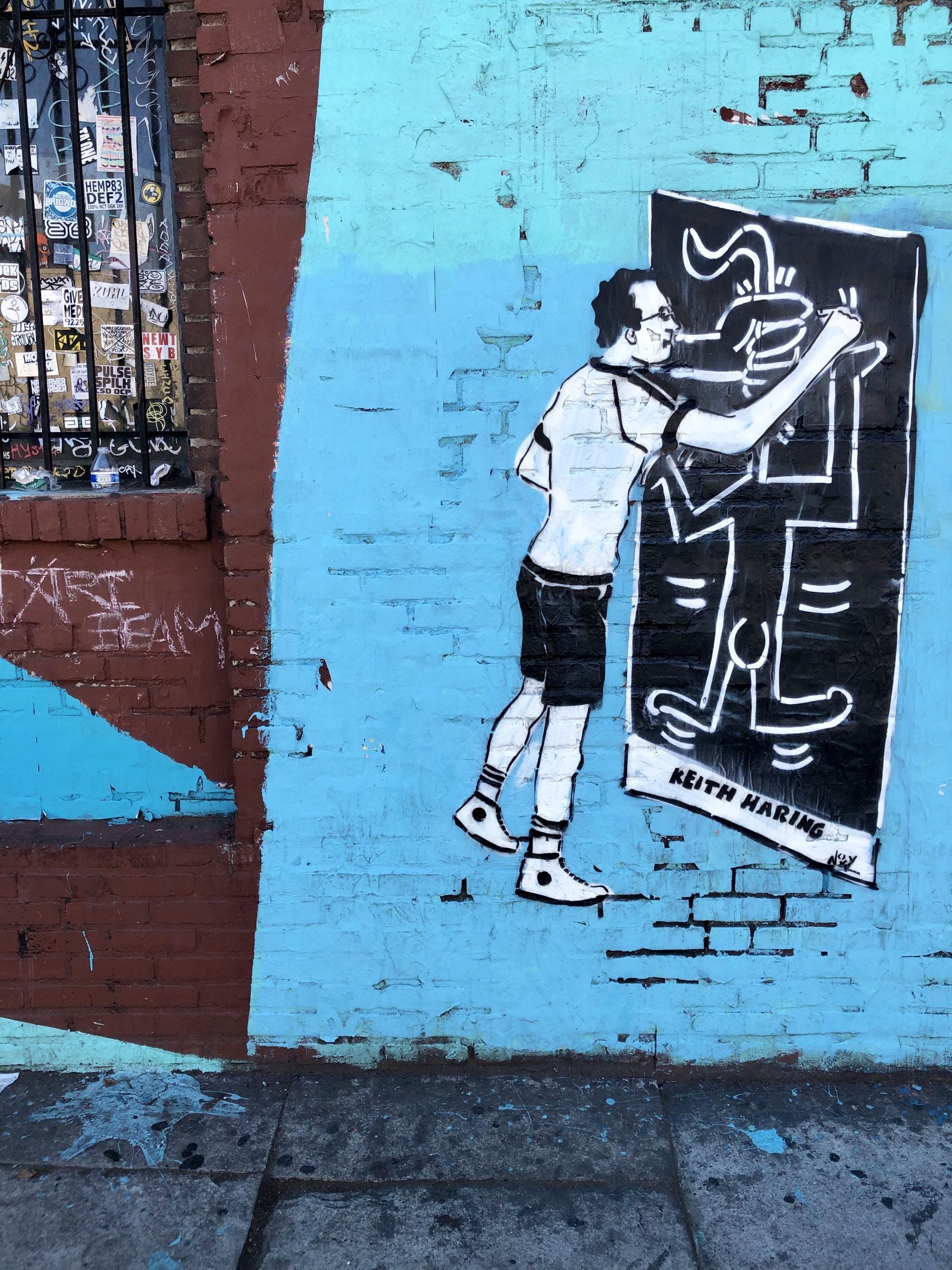
“I started documenting my process in photographs, and soon the Wisconsin State Journal was reaching out for an interview. When the article came out, I discovered they had interviewed the anti-graffiti people at the Department of Public Works, and they said they only wished I had a different canvas to put my art on. They did not think what I was doing was wrong. They understood that I was trying to make a statement about blight – and they wished there were not boarded-up buildings too.
That kind of sparked my creativity, I can put images out into the world about different causes that I feel are important, and people can see them and hear my message. And if I do them well, people will agree with what I am trying to express. This is a much quicker way to reach them than through City Hall requests, proposals, meetings, etc. I can cause social change by just doing art.
That was fascinating to me. I was doing urban still life, where I’d place an image out into the world that was fixing the urban blight and decay, just by adding some color, or whimsy. You would have something broken and then you would have something beautiful next to it. I started putting stencils on pay phones in boxes where the phones were no longer there. I was trying to highlight things I wanted to change. Maybe we can get rid of some of this decay happening in cities.”
— Jeremy Novy in an interview with Michail Takach of Wisconsin LGBTQ History Project
His activist identity in the street art world extends beyond his own practice to the community he has worked to build and document. After receiving a National Endowment for the Arts grant in 2008, Jeremy curated “A History of Queer Street Art,” the world’s first group exhibition of queer street art. The show premiered in San Francisco to critical acclaim before traveling to a Los Angeles pop-up gallery and, in 2013, to Yale University, the same gallery, Novy notes with satisfaction, where Robert Mapplethorpe’s photographs had once stirred controversy over their NEA grant funding. The exhibition was more than a curated show; it was an act of archivism and network-building, connecting queer street artists around the world who had been working in isolation, believing themselves to be the only person doing this kind of work in their city.
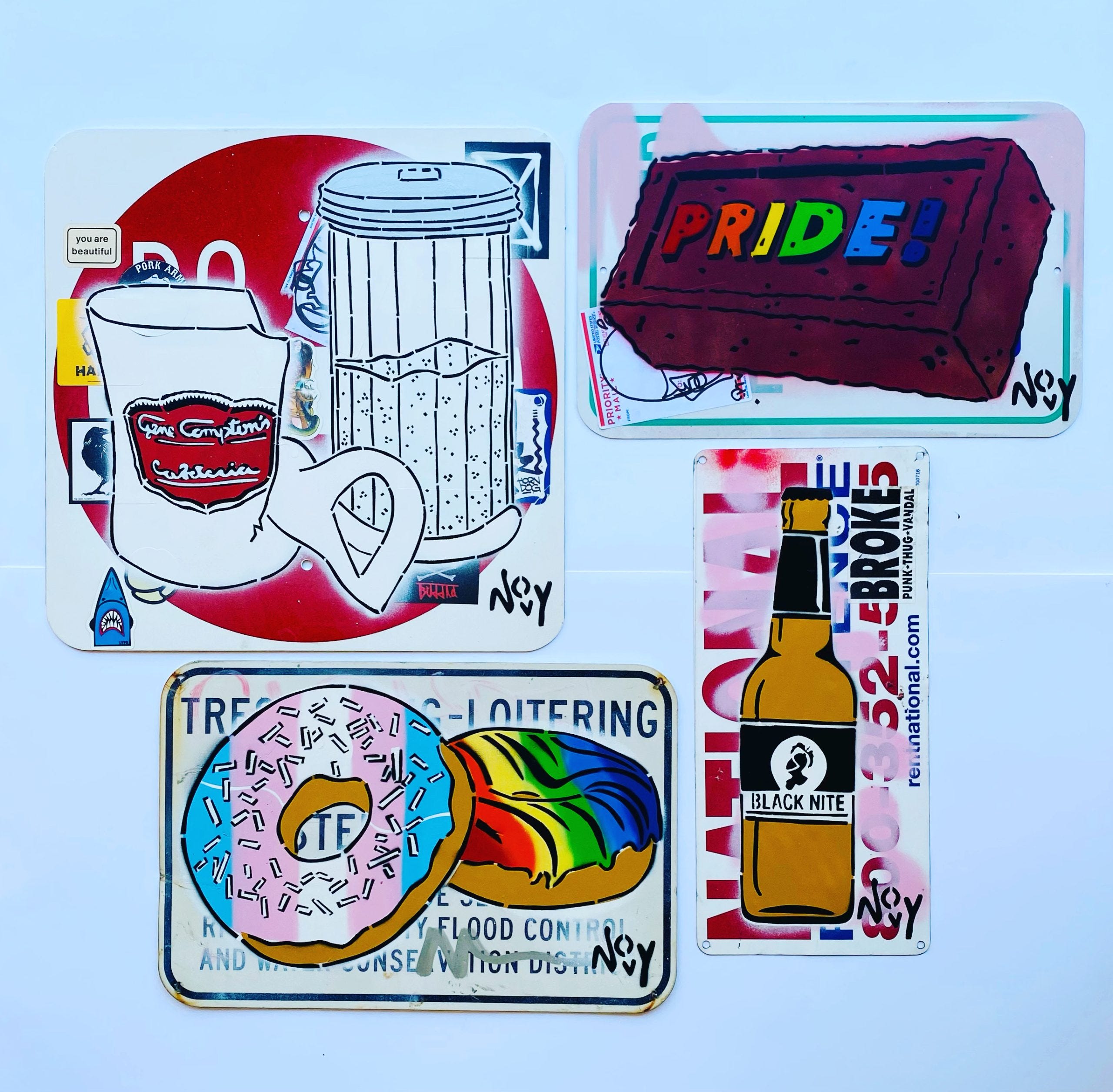
His series of historical commemorations represents perhaps his most ambitious activist project. Jeremy has created stencil tributes to the Black Nite Brawl of 1961 in Milwaukee, Compton’s Cafeteria Riot of 1966 in San Francisco, the Black Cat Raid protest of 1967 in Los Angeles, and the Upstairs Lounge fire of 1973 in New Orleans, the worst mass murder of gay people in American history until the Pulse nightclub shooting in 2016. He has also created a stencil of Harvey Milk accompanied by his famous quote, and has worked to document queer rights tipping points around the world, recognizing that the struggles that preceded Stonewall deserve to be remembered as part of the same continuum of resistance. “Queer history is always in danger of becoming reduced to the spoken word,” he has said, articulating what drives this work: the conviction that ephemeral oral history is not enough, that images on walls persist in ways that words in rooms do not.
“I’m really trying to find those queer events around the world that caused the tipping point in queer rights. Because, you know, they are everywhere, and I think that people should know about them. We see queer history removed from schools and libraries, and it is always in danger of becoming reduced to the spoken word. Documenting these events with art is so important.
Sometimes, I don’t think people realize the significance of their own community. For Harvey Milk Day in San Francisco, I created a stencil of Harvey Milk, complete with the famous quote ‘if a bullet should go through me, then let that bullet destroy every closet door.’ When I brought it to Milwaukee, and posted it all over Walker’s Point, nobody had any idea who it was. No one!
And I was just like, that is so weird. You really don’t know Harvey Milk? It made me realize that we need to put more out there, more often, so that people know the history of our own community. They need to figure out who these people are, why they are significant, and talk amongst themselves. That is probably gentler than having someone preaching it to them.
You have to put it out there. Do not ask for permission. Hope you get forgiveness afterwards. If it gets defaced, you need to go back out and put it up again. You do not sit down with a homophobic person and try to convince them not to be homophobic. You just keep showing up and showing them who you are.”
— Jeremy Novy in an interview with Michail Takach of Wisconsin LGBTQ History Project
Novy’s activism also extends into everyday charitable practice. He regularly donates artwork to queer charities, has designed T-shirts for food insecurity campaigns, and has used his platform to advocate for the wider acceptance of queer images in public murals. Murals, he argues, have the power of Will & Grace multiplied across every city block: they create visibility at scale, change casual assumptions about who belongs, and prove to queer people in hostile environments that they are not alone. That is not a small thing to ask of paint on a wall. But Jeremy Novy has spent his career proving it is not an unreasonable one.
“For a long time, we did not even have queer TV. Think about the power of Will & Grace. When people started seeing Will & Grace on TV, there was this sense that ‘gay people are OK, they’re not terrible people after all.’ Will & Grace somehow created queer visibility and a visual safe space through TV. I believe that queer murals could also achieve that.”
— Jeremy Novy in an interview with Michail Takach of Wisconsin LGBTQ History Project
